
Banks have swung into action as gold prices continue to slide. Reduced loan-to-value ratio (LTV), cautious lending, and a close monitoring of the gold loan portfolio have prompted them to hedge their loan books against the reduction in prices.

At other bank ATMs, the customers of these banks will be charged beyond three transactions.

Even as State Bank of India, the country's largest lender, has decided to charge its customers for more than five transactions through automated teller machines (ATMs), private sectors banks continue to be on a wait-and-watch mode.

2014 sees slowest start to festival season in at least 7 years
.jpg)
As many as nine respondents said RBI would hold the repo rate at 8% till March-end, 2015
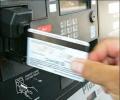
Currently, the fee is Rs 15 per financial transaction. This has been recommended to be revised to Rs 16.50, plus service tax (12%), taking the amount to Rs 18.48.

Based on the credit history banks may later decide to extend the amount.

Their net NPA as a proportion of net advances were 2.2 per cent, compared with 1.7 per during the same period a year earlier.

In fact, some private sector lenders have decided to skip advertising these altogether.

SBI, ICICI Bank and PNB reduce interest rate for loans above Rs 75,00,000

ICICI Bank has 317 branches in hitherto unbanked villages.

Banks cut interest rates, processing fees; offer discounts for online shoppers.

Days after the PM announced a financial inclusion package, a look at how banks and insurance firms are going about it and what lies ahead.
IndusInd Bank, has recently launched www.themorestore.com only for its credit card and debit card holders

Move comes after the country's monetary authority tightened credit norms

Private lenders have also been expanding their branch and automate teller machine networks aggressively.
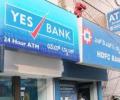
The voting results were concluded on Sunday and will be sent to the exchanges on Monday morning. YES Bank could not be reached for comment.

However, the remuneration of Puri and Kochhar are not strictly comparable as the two banks follow different accounting practices.
In the domestic market, the cost is a third but in the international market, we are finding it difficult to price it accordingly.

A white-label ATM is similar to a normal bank ATM but is not owned by a bank, instead by a private ATM service provider.
 © 2026 Rediff.com - Advertise with us - Disclaimer - Privacy Policy - Sitemap - Feedback - About us - Terms of use - Grievances